
Apple Outage 2026: Why iCloud, App Store and Apple Music Suddenly Stopped Working
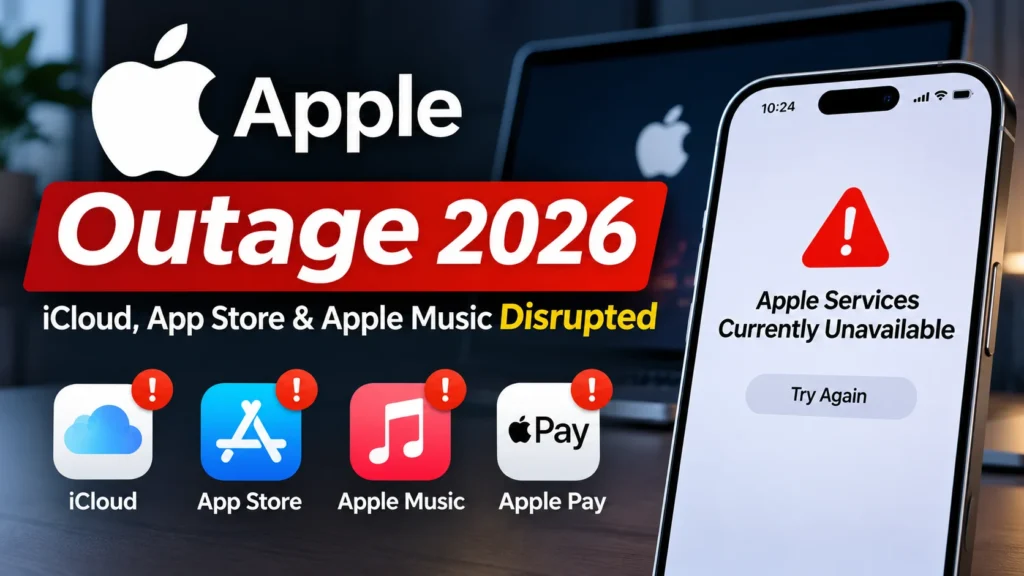
Imagine picking up your iPhone to download an important app, only to discover that the App Store won’t load. You try signing into iCloud, but your account refuses to connect. Even Apple Music seems to have stopped working. For many Apple users, this frustrating situation became a reality on November 17, 2026.
A widespread Apple outage disrupted several of the company’s most popular services, leaving users struggling with account access, app downloads, music streaming, and other everyday activities. The disruption quickly attracted attention online as people searched for answers about why Apple services were suddenly unavailable.
Apple later confirmed that an internal system update triggered the problems. Although the company worked to restore its services, the incident raised an important question: how could a routine internal change interrupt so many essential features at once?
Here’s what happened during the Apple outage, which services were affected, what caused the disruption, and whether everything is working again.
What Happened During the Apple Outage on November 17?
The Apple outage began on Tuesday, November 17, when users started reporting difficulties accessing several Apple services. Reports increased around late morning in the United States, with people encountering failed sign-ins, unavailable applications, and unexpected service errors.
Apple’s official System Status page confirmed disruptions involving multiple platforms, including the App Store, Apple Music, AppleCare, and iCloud account services.
The problems weren’t limited to entertainment or app downloads. Some users were unable to access their Apple Accounts, while others experienced interruptions involving services connected to their devices.
Reports also indicated that Apple retail stores encountered operational difficulties, affecting certain customer transactions and appointments.
For a company whose products are closely connected through a shared ecosystem, the incident demonstrated how problems in one part of its infrastructure can affect several different experiences.
Which Apple Services Were Affected?
The November 17 disruption affected multiple services that millions of people rely on for communication, entertainment, purchases, and account management.
App Store and Apple Music
The App Store was among the most noticeable services affected by the Apple outage. Users reported problems opening the store, browsing available applications, and downloading content.
Apple Music also experienced an outage, creating difficulties for listeners trying to access the streaming service.
Although some previously downloaded content may have remained accessible, features requiring a connection to Apple’s servers could fail while the disruption continued.
iCloud Account and Sign-In Issues
For many users, the most frustrating problem involved iCloud.
Some people reported being unexpectedly signed out of their Apple Accounts, while others encountered errors when attempting to sign back in. These problems made it difficult to access services connected to iCloud authentication.
Reports also identified disruptions involving iCloud Mail and web applications, affecting users who depend on Apple’s cloud services for personal and professional activities.
AppleCare, Apple Pay and Business Services
AppleCare was another service affected by the disruption. Apple’s system status information also identified problems involving business and education platforms, including Apple Business, Apple School Manager, and Schoolwork.
Meanwhile, outage-monitoring platform Downdetector recorded increased complaints involving Apple Pay.
However, user reports on Downdetector don’t necessarily establish that every reported problem originated from the same technical failure.
The range of affected services nevertheless showed how widely the disruption was felt across Apple’s ecosystem.
What Caused the Apple Outage?
Apple eventually identified an internal update as the cause of the November 17 service interruption.
According to the company’s statement, the update created problems that affected multiple systems. Apple began restoring the disrupted services while engineers worked to bring the remaining systems back online.
Importantly, Apple indicated that the incident was not caused by a cyberattack.
That distinction matters because major technology outages often generate speculation about hacking, data breaches, or malicious activity.
In this case, the available reporting pointed toward an internal technical failure rather than an external security incident.
Apple did not publicly provide a detailed technical explanation identifying the specific software component or configuration change responsible for the disruption.
Large technology platforms regularly update their infrastructure to improve performance, reliability, and security. However, unexpected interactions between interconnected systems can sometimes create problems even when changes are intended to improve services.
Is the Apple Outage Fixed Now?
By Tuesday evening, November 17, reports indicated that Apple’s major consumer-facing services had largely recovered.
Apple’s System Status page showed no active outages around 6 p.m. Eastern Time, according to reporting published that evening. Some business and education services had remained affected later than the main consumer platforms.
This suggested that the company had successfully restored most of the systems disrupted earlier in the day.
However, service recovery doesn’t always happen simultaneously for every user. Temporary account errors, cached connection problems, or regional differences may occasionally continue after the main issue has been resolved.
Anyone still experiencing problems should check Apple’s official System Status page for the latest information rather than assuming the earlier outage is continuing.
Apple Wasn’t the Only Company Facing Technical Problems
The timing of the Apple outage made the incident particularly notable because several other major organizations experienced technology disruptions around the same period.
Marriott International reported a separate technical problem affecting sign-ins to its website and Marriott Bonvoy application.
Earlier disruptions had also affected United Airlines, the Federal Aviation Administration, banking services, and Microsoft’s cloud-based productivity platforms.
These incidents attracted attention because they involved services that people depend on for travel, financial transactions, workplace communication, and everyday activities.
However, there is no established evidence that the Apple outage was connected to those other disruptions.
The incidents occurred close together, but that doesn’t mean they shared a common cause.
What they do highlight is the growing dependence of businesses and consumers on large, interconnected digital systems.
What Should You Do If Apple Services Stop Working?
When Apple services become unavailable, the first step is to determine whether the problem affects your device or Apple’s wider network.
Visit the official Apple System Status page to see whether the company has acknowledged any current disruptions. This is particularly useful when the App Store, Apple Music, or iCloud suddenly stops responding.
If Apple confirms an outage, repeatedly signing out of your account, resetting passwords, or changing device settings may create unnecessary complications.
Instead, wait for the company to restore the affected service and try again later.
If Apple’s status page shows everything operating normally, check your internet connection, restart the affected application, and confirm that your device is running compatible software.
You can also review outage-monitoring websites to understand whether other users are reporting similar problems. However, remember that these platforms collect user complaints and aren’t official confirmation of an Apple service failure.
Why the Apple Outage Matters Beyond One Day
The November 17 Apple outage was more than an inconvenience for people trying to stream music or download applications.
It demonstrated how deeply Apple’s services are integrated into everyday digital life. An interruption affecting account authentication can influence access to multiple applications and connected features.
For businesses using Apple devices and cloud services, temporary disruptions can also interfere with employee access, device management, and routine operations.
The incident is a reminder that even highly developed technology platforms can experience unexpected failures.
Reliable infrastructure, careful update procedures, and effective recovery systems remain essential as more activities move online.
Final Thoughts
The Apple outage on November 17, 2026, temporarily disrupted several major services, including Apple Music, the App Store, AppleCare, and iCloud sign-in.
Apple attributed the problems to an internal update and said the incident was not the result of a cyberattack. By Tuesday evening, major services appeared to have recovered.
Although the disruption was temporary, it highlighted the importance of dependable digital infrastructure and how quickly technical problems can affect millions of connected devices.
For users wondering whether Apple services are currently down, the most reliable starting point remains Apple’s official System Status page, where service interruptions and recovery updates are published.